Episode 21: Caitlin Hobbs on Life and Death During a Pandemic

Image courtesy of Caitlin Hobbs.
Our new episode is available from our Podcast host here: Episode 21
We’re also listed on:
Read more
Image courtesy of Caitlin Hobbs.
Our new episode is available from our Podcast host here: Episode 21
We’re also listed on:
Read more

Image: “Transmission electron micrograph of SARS-CoV-2 virus particles, isolated from a patient. Image captured and color-enhanced at the NIAID Integrated Research Facility (IRF) in Fort Detrick, Maryland.” (Source: National Institute of Allergy and Infectious Diseases, NIH – Flickr)
Our new episode is available from our Podcast host here: Episode 17
Read more
Image: Methane hybridization. (Source: Wikimedia Commons)
Our new episode is available from our Podcast host here: Episode 16
Read more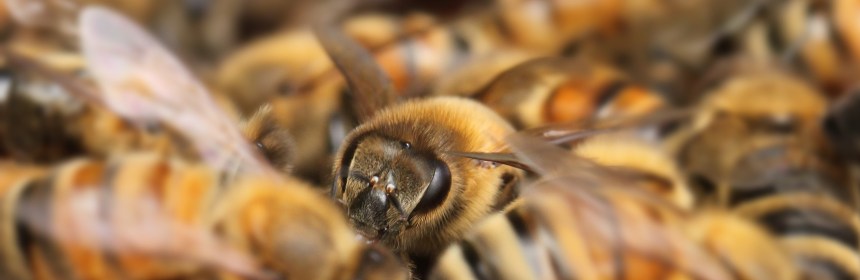
Image: A photograph of workers from a managed hive of Apis mellifera, the European honeybee. (Source: Charles Wallace)
Our new episode is available from our Podcast host here: Episode 14
We’re also listed on:
Read more
Image: An illustration of the concept of reptation, “motion of long linear, entangled macromolecules in amorphous polymers.” (Source: Wikimedia Commons)
Our new episode is available from our Podcast host here: Episode 13
We’re also listed on:
Transcript available below the read more.
Read more
Our new episode is available from our Podcast host here: Episode 12
We’re also listed on:
Transcript available below the read more.
Read more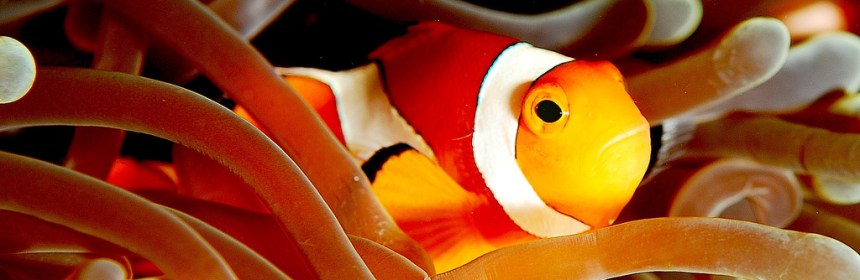
Image: Clownfish (Amphiprion ocellaris). (Source: Wikimedia Commons)
Our new episode is available from our Podcast host here: Episode 11
We’re also listed on:
Read more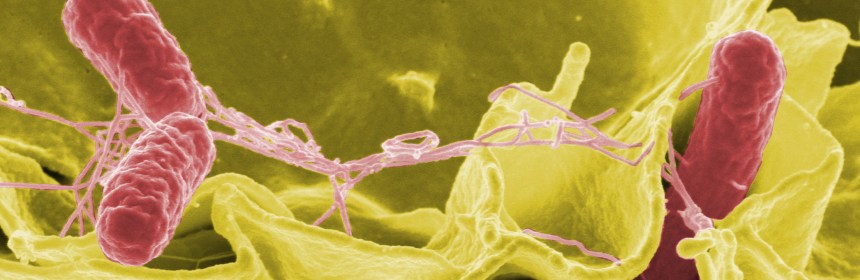
Image: Color-enhanced scanning electron micrograph showing Salmonella typhimurium (red) invading cultured human cells. (Source: Wikimedia Commons)
Our new episode is available from our Podcast host here: Episode 10
Read more
Image: “This global view of the surface of Venus is centered at 180 degrees east longitude. Magellan synthetic aperture radar mosaics from the first cycle of Magellan mapping are mapped onto a computer-simulated globe to create this image. Data gaps are filled with Pioneer Venus Orbiter data, or a constant mid-range value. Simulated color is used to enhance small-scale structure. The simulated hues are based on color images recorded by the Soviet Venera 13 and 14 spacecraft. The image was produced by the Solar System Visualization project and the Magellan science team at the JPL Multimission Image Processing Laboratory and is a single frame from a video released at the October 29, 1991, JPL news conference.” (Source: NASA)
This episode is available from our podcast host here: Episode 9
We’re also listed on:
Read more Assigned Scientist at Bachelor's